
Successful canine breeding depends on many factors, including fertility, timing, semen quality, and the reproductive health of both the male and female. Artificial insemination (AI) has become an increasingly popular option for breeders because it allows access to genetic lines from around the world while reducing many of the logistical challenges associated with natural mating.
Whether using fresh, chilled, or frozen semen, understanding the available insemination methods and proper breeding management can significantly improve the chances of a successful pregnancy.
What Is Artificial Insemination?
Artificial insemination is a reproductive technique in which semen is collected from a male dog and deposited into a female dog’s reproductive tract without natural mating. Depending on the breeding circumstances, semen may be used immediately after collection (side by side AI), shipped chilled, or it could be frozen semen that was stored for future use.
AI offers breeders flexibility when stud dogs are deceased, or when geographic distance, physical limitations, temperament concerns, or scheduling challenges make natural breeding difficult or impossible.
Why Breeders Choose Artificial Insemination
Artificial insemination offers several advantages, including:
- Access to superior genetics from distant studs
- Ability to use frozen semen from deceased, international, or retired stud dogs
- Reduced risk of injury during breeding
- Elimination of travel stress for breeding dogs with the use of shipped semen
- Improved breeding management and scheduling
- Knowledge of semen quality
When combined with accurate progesterone timing to confirm ovulation, AI can achieve pregnancy rates comparable to or even exceeding natural breeding in many situations.
The Importance of Timing
One of the most critical components of a successful breeding program is determining the female’s fertile window. Ovulation does not occur on the same day for every bitch, making hormone monitoring an essential part of the breeding process.

Progesterone testing is commonly used to track reproductive hormone changes and, when performed correctly, can accurately confirm the date of ovulation. Rather than relying on a single progesterone value, veterinarians and reproductive specialists evaluate the progression of hormone levels over several days. Ovulation is confirmed by observing a rise of 3 ng/ml or more within a 24-hour period. Because ovulation can occur anywhere between progesterone levels of approximately 3 ng/ml and 12 ng/ml, consecutive daily testing is recommended once the female reaches 3 ng/ml to accurately identify the ovulation date.
Accurate and regular progesterone monitoring helps determine the optimal insemination date and ensures semen is introduced when the eggs are most capable of being fertilized.
Types of Artificial Insemination
Several insemination techniques are available, each with its own advantages and considerations.
Vaginal Insemination
Vaginal insemination (standard AI) involves depositing semen into the vaginal canal using a catheter. This method can be used with fresh or chilled semen and may be appropriate when fertility factors are favorable. Frozen semen cannot be used for a standard AI.
Transcervical Insemination (TCI)
Transcervical insemination, commonly called TCI, is an advanced non-surgical procedure that allows semen to be placed directly into the uterus.
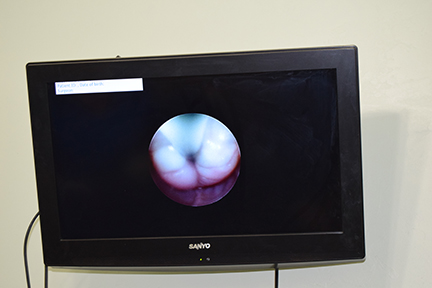
During the procedure, a rigid endoscope equipped with a camera is gently passed through the vaginal tract to locate the cervix. Once visualized, a soft flexible catheter is passed through the cervical opening, allowing fresh, chilled, or frozen semen to be deposited directly into the uterus.
Using a video monitor, the clinician can observe catheter placement in real time, helping ensure proper positioning while minimizing semen backflow. Because TCI is a quick, minimally invasive procedure, frozen semen can be thawed after the catheter has already been successfully passed through the cervix. This reduces the amount of time the semen remains thawed before insemination. In most cases, a flash-thaw is performed, and the semen is deposited directly into the uterus immediately afterward, resulting in only about five minutes between thawing and insemination.
Because the procedure avoids surgery and anesthesia, TCI is widely regarded by canine reproduction veterinarians as the preferred intrauterine insemination technique and is recognized as one of the most successful breeding methods when paired with accurate ovulation timing.
Benefits of TCI
Transcervical insemination offers several advantages:
- Direct placement of semen into the uterus
- No surgical incision- meaning no recovery time
- No general anesthesia required
- Reduced stress on the female
- Suitable for fresh, chilled, and frozen semen
- High reported conception rates when properly timed
Accurate progesterone testing remains essential. Ovulation is confirmed through hormone trends rather than a single numerical value. Consistent monitoring allows breeding specialists to determine the most effective insemination dates based on the type of semen being used.
We have a 93% success rate with our progesterone timing protocol followed with TCI with frozen semen here at Sirius.
Addressing a Common Concern
Some breeders worry that TCI may increase the risk of pyometra. Current evidence does not support the belief that transcervical insemination increases pyometra risk beyond that associated with normal reproductive cycling. The condition can occur in females regardless of whether they are naturally bred, artificially inseminated, or not bred during a heat cycle. It is also important to understand that semen itself is not sterile and naturally contains bacteria, whether breeding occurs through natural mating or artificial insemination. The presence of bacteria in semen is considered normal and, when proper collection, handling, and breeding protocols are followed, does not appear to increase the risk of pyometra specifically associated with TCI.
However, because TCI visualizes the cervix rather than the interior of the uterus, conditions such as uterine cysts or endometrial abnormalities cannot be directly evaluated during the procedure itself.
Timing Recommendations for TCI
Breeding recommendations vary depending on the semen type being used.
Frozen Semen
Frozen semen has a shorter lifespan after thawing and requires precise timing. Many reproductive specialists recommend:
- Two TCI procedures between days 3 and 5 post ovulation
- If only one insemination is performed, it should be done day 4 or 5 post ovulation
Fresh or Chilled Semen
Fresh and chilled semen generally survive longer within the reproductive tract. Typical recommendations include:
- Two TCI procedures on approximately days 2 and 4 post ovulation
- If only one insemination is performed, around day 3 post ovulation
Whenever possible, multiple inseminations may help maximize the opportunity for fertilization.
Surgical Insemination
Surgical insemination is another intrauterine breeding method in which semen is deposited directly into the uterus during a surgical procedure performed under anesthesia.
Although less commonly utilized today due to advances in TCI techniques, surgical insemination may still be considered in certain situations.
When Surgical Insemination May Be Recommended
A veterinarian may discuss surgical insemination when:
- Passage through the cervix cannot be achieved during TCI
- The female is older and may have reduced fertility
- Previous breeding attempts have been unsuccessful
- Reproductive abnormalities are suspected
- Ultrasound findings suggest uterine changes, or abnormal progesterone results, that warrant additional evaluation
- Behavioral necessity
- Experienced TCI services are unavailable
Risks Associated With Surgical Insemination
As with any surgical procedure, risks must be carefully considered.
Potential complications include:
- Reactions to anesthesia
- Surgical stress
- Post-operative inflammation
- Delayed healing
- Incision site complications
- Suture reactions
- Infection
- In some cases, a bitch may develop an immune response to semen deposited during a surgical insemination. This reaction can result in the production of antibodies against the semen, potentially reducing fertility and affecting breeding success.
In some cases, hormonal conditions present during estrus may contribute to slower clotting or healing. Owners should be aware that post-operative discharge or incision-related complications may require additional veterinary care.
It is also important to consider that some bitches may ultimately require a cesarean section at the time of whelping, which could result in undergoing two surgical procedures within a span of approximately two months.
For these reasons, many breeders and reproductive specialists prefer non-surgical methods when appropriate and when experienced TCI practitioners are available.
Choosing the Right Breeding Method
Every breeding program is unique. The best insemination method depends on several factors, including semen type, reproductive history, age, fertility status, and the availability of skilled reproductive professionals.
Accurate ovulation timing, semen quality, and proper reproductive management remain the foundation of breeding success regardless of the insemination technique selected.
Working with experienced canine reproduction specialists can help breeders develop a breeding plan tailored to the needs of their dogs while maximizing the likelihood of a successful pregnancy.
TCI Consultations
Sirius Canine Fertility provides canine reproductive services and breeder education, including progesterone testing, breeding management, and transcervical insemination (TCI). Breeders are encouraged to discuss individual circumstances and reproductive histories to determine the most appropriate breeding approach for their dogs.
Sirius Canine Fertility
Phone: 530-273-9123
Email: [email protected]
Website: www.siriuscaninefertility.com