
Semen quality is one of those things breeders don’t think about until there’s a problem. Your dog hits his show or performance goals, you decide it’s time to collect and freeze for future litters — and then you find out the numbers aren’t where they need to be. Unfortunately, a long list of factors can quietly erode sperm production and quality in dogs, and most of them are avoidable if you know what to look for.
Here’s what affects semen quality and what you can do about it.
Age and Sperm Production: Don’t Wait Too Long
Most dogs experience a natural decline in sperm production as they age. We regularly see 10- and 12-year-old dogs come in for their first collection and freeze, and the results are a coin flip — sometimes there’s enough viable sperm to work with, sometimes there isn’t.
The single best thing you can do for your dog’s genetic legacy is collect and freeze while he’s young. Yes, it’s an extra expense and an inconvenience when breeding feels far off. But banking semen from a dog in his prime guarantees you’ll have high-quality reserves available regardless of what happens to his health or fertility later. This is insurance that pays for itself the first time you need it.
Subclinical Reproductive Infections
Your dog doesn’t have to look sick to have an infection that’s silently undermining his sperm production. Subclinical infections of the reproductive tract are more common than most breeders realize, and the signs are easy to miss without a formal semen evaluation.
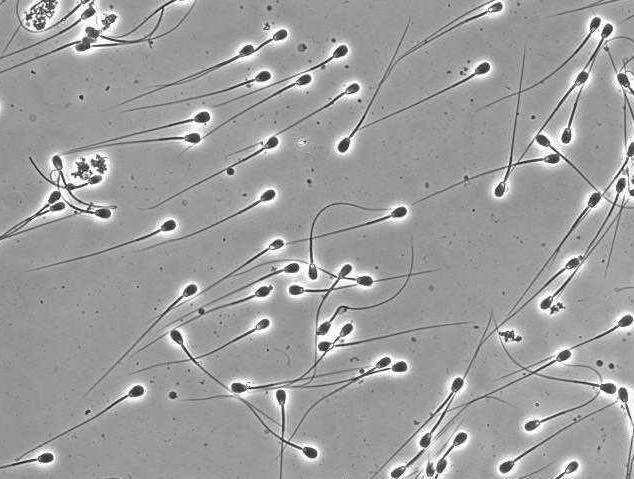
When we see bacteria and cellular debris during a semen analysis, we recommend a culture. Even low-grade infections that produce no outward symptoms can suppress sperm count and compromise motility. The good news is that once identified, these infections are typically treatable — and sperm production often recovers once the infection clears.
Diet and Its Impact on Canine Sperm Quality
What your dog eats directly affects his reproductive health. Any diet that promotes systemic inflammation can suppress sperm production, and several common ingredients are worse than breeders realize.
Kibble vs. raw is the first consideration. Dry kibble is inherently more pro-inflammatory than a raw diet due to processing, and that baseline inflammation can chip away at reproductive function over time.
Allergens are the next concern. Corn is a well-known offender, but it’s not the only one. If your dog has any food sensitivities, chronic low-grade inflammation from allergen exposure will impact sperm quality.
Phytoestrogens are the hidden threat. Flax seed and peas — two ingredients that show up in countless “premium” dog foods — either contain estrogens or are converted into estrogenic compounds inside the canine body. Estrogen exposure in a male dog suppresses sperm production directly. Read your ingredient labels and supplement lists carefully. If flax or peas are present, find an alternative.
Medications That Are Toxic to Sperm
Several commonly prescribed medications are directly harmful to sperm, and your regular vet may not think to mention it if they don’t know your dog is a breeding animal.
Metronidazole (Flagyl), frequently prescribed for giardia and diarrhea, is directly toxic to sperm cells. Ketoconazole, a go-to treatment for yeast skin infections, carries the same risk. Both of these are routine prescriptions that most vets reach for without a second thought.
Steroidal medications (corticosteroids) and chemotherapeutic drugs also suppress sperm production and should be minimized or avoided entirely in breeding dogs whenever possible.
The simplest protection here is communication. Every time you take your stud dog to the vet — for any reason — make sure they know he’s an active breeding animal. That one sentence can change which medications get prescribed and save months of recovery time for his sperm production.
Temperature Extremes and Sperm Production
Sperm production is temperature-sensitive by design. Under normal conditions, dogs regulate testicular temperature by adjusting how close the testicles sit to the body. But when environmental temperatures swing to extremes — excessive heat or severe cold — that self-regulation isn’t enough.
Prolonged heat exposure is particularly damaging. Dogs kept in hot environments, exercised heavily in high temperatures, or left without adequate cooling can experience significant drops in sperm count and an increase in morphological defects. Cold extremes can produce similar effects, though heat is the more common culprit in practice.
If your stud dog lives in a climate with temperature swings, climate control during peak season matters more than most breeders give it credit for.
Systemic Health Conditions as a Hidden Cause
The reproductive system is one of the most sensitive barometers of overall health in the male dog. When something is going wrong systemically — even if it hasn’t produced obvious symptoms yet — sperm production is often the first thing to suffer.
A decline in sperm numbers or a spike in morphological defects with no obvious cause (no infection, no dietary issue, no medication history) is a red flag that something else is happening. In these cases, we recommend a thorough physical exam with full bloodwork to screen for underlying systemic conditions.
Sometimes the semen analysis is the canary in the coal mine. Don’t ignore what it’s telling you.
The Bottom Line for Breeders
Protecting your stud dog’s semen quality isn’t a single action — it’s an ongoing commitment to smart management. Freeze young, feed clean, avoid estrogenic ingredients, communicate with your vet about breeding status, manage temperature exposure, treat infections early, and pay attention when the numbers start to shift.
The dogs that produce the best semen over the longest careers are the ones whose owners treated fertility as something worth actively managing — not something they got around to when it was already a problem.